

Pioneering a banana plantation on degraded land in Palangka Raya
Updated: Jun 4
Eka Kadek Wiarta is the farm supervisor on Bumi Baru's first restoration project, a 20-hectare plot of severely degraded land located in Central Kalimantan. We asked Kadek about his experience leading the project, the transformation that took place on the site, and his views on the importance of land restoration.

What were your initial views when you saw the land in Central Kalimantan?
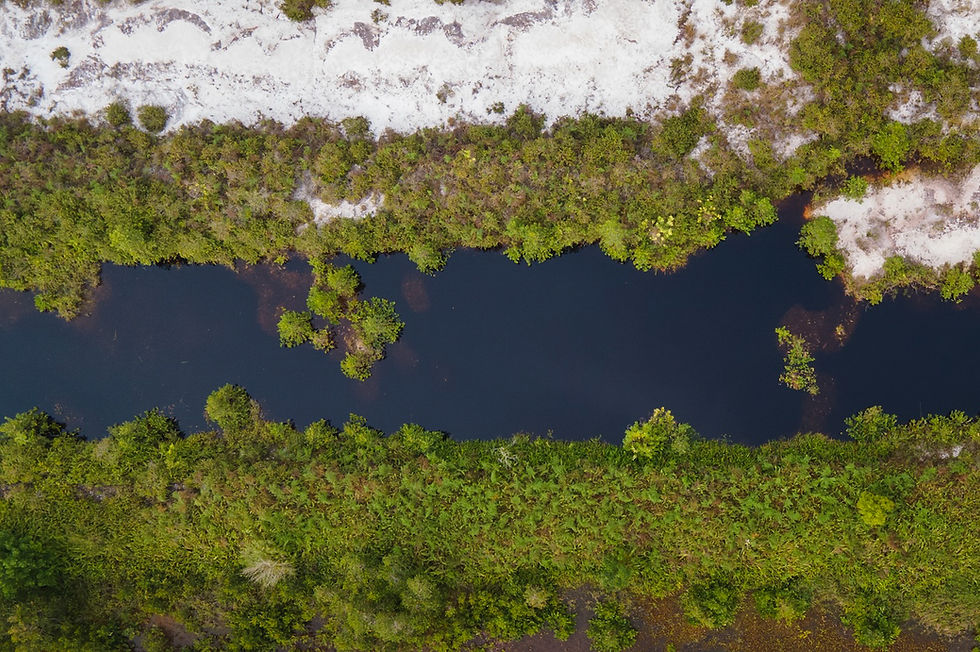
When I first arrived at the site, I was quite surprised because most of the land was white sand, with low fertility. Here, our soil was also very acidic, at least 4pH, and it might even be below 4pH. Seeing these conditions, I started to wonder, 'What can we do with land like this?'
How were you able to overcome the challenges related to the land condition?
The land preparation is the most challenging part here in Kalimantan, especially land clearing. After that, the first thing we did was soil preparation to reduce the soil acidity. We applied dolomite to balance the soil acidity. We also added fertilizers matching the soil's needs. We took steps to prevent waterlogging, and built irrigation channels so rain water can drain and there's no stagnant water.
Using our experience, we tried better cultivation methods. We left the soil for a while and then checked the soil health again, until the land was ready for planting. To increase soil fertility, we used pure organic fertilizer, and we carefully applied it during planting.
What was it like for you to try to grow bananas from degraded land?
When we first cleared the land, many local residents asked, 'What is this land going to be used for?'
I answered, 'For bananas.' They asked, 'Is it possible? Can bananas really be planted here?'
We faced many challenges in cultivating the first harvest of Kepok bananas. First, at the planting stage, we experienced pest attacks and had to find a way to control and manage the pests. Then, the biggest challenge came when the banana trees grew tall and started to bear fruit. Heavy rain and strong wind knocked down some trees, so we had to problem solve a solution for this.
But we kept trying, and in the end, we succeeded. The first harvest proved to be excellent, and since I came to Kalimantan, I have never seen bananas as good as the ones we have here.
Why do you think it's important to restore degraded land like Bumi Baru has done here?
I think this is important for the future, especially for the people of Kalimantan. Let’s encourage them to try cultivation, whether it is bananas or pineapples. Can it be done? Yes, it can. As I mentioned earlier, even with such extreme soil conditions, we were able to manage it and achieve results. Also, land restoration can absorb labour and provide income. People who previously did not have much income, now earn income through employment on this project.
I feel very proud because we proved that we can do it. From land that was nothing, idle land, we were able to make it productive and harvested very good fruit. In my opinion, it is important to educate the local community that land that was previously unmanaged or abandoned can be cultivated to provide income.
-- Eka Kadek Wiarta, Farm Supervisor
What's your hope for the next steps and the future?
My first hope is to expand our cultivated land, and for Bumi Baru's development and growth so we can continue to progress. In addition to that, I also hope we can provide more labour for the surrounding community.

###